
Solving India’s Daily Service Gap Through Technology, Trust, and Speed
When Everyday Tasks Become Everyday Friction
India’s urban life runs on speed—fast internet, quick commerce, instant payments. Yet, when it comes to the most basic daily needs—cleaning, small household help, or urgent service support—the system still feels broken. Delays, lack of reliability, inconsistent quality, and trust issues plague the unorganised services sector.
For Aayush Agarwal, this disconnect was impossible to ignore.
What began as a personal frustration soon evolved into a full-fledged startup mission—one that aims to bring speed, predictability, and professionalism to India’s everyday service economy. That mission today is called Snabbit.
From Frustration to Founder Insight
The idea for Snabbit didn’t come from a boardroom brainstorming session. It came from lived experience.
Like millions of urban Indians, Aayush faced repeated challenges finding reliable household help at short notice. Whether it was a last-minute cleaning requirement or an urgent support task, the options were limited to word-of-mouth referrals or unorganised local providers—often unreliable and inconsistent.
“Everything around us was becoming instant—food, groceries, cabs—but basic services were still operating in a decade-old system,” Aayush recalls. “That gap felt like an opportunity hiding in plain sight.”
This realisation marked the beginning of Snabbit.
Founder Background: Roots That Shaped the Vision

Image Credits: Aayush Agarwal
Aayush Agarwal comes from a background that blends analytical thinking with real-world exposure. Educated in a system that valued problem-solving and efficiency, he developed an early interest in how technology could simplify complex human systems.
Growing up in India, Aayush witnessed firsthand how informal labour markets functioned—largely trust-based, relationship-driven, but often inefficient and opaque. These early observations stayed with him.
“India doesn’t lack talent or hard work,” he explains. “What we lack is structure.”
That belief would later become the backbone of Snabbit’s operating model.
Building the Core Team
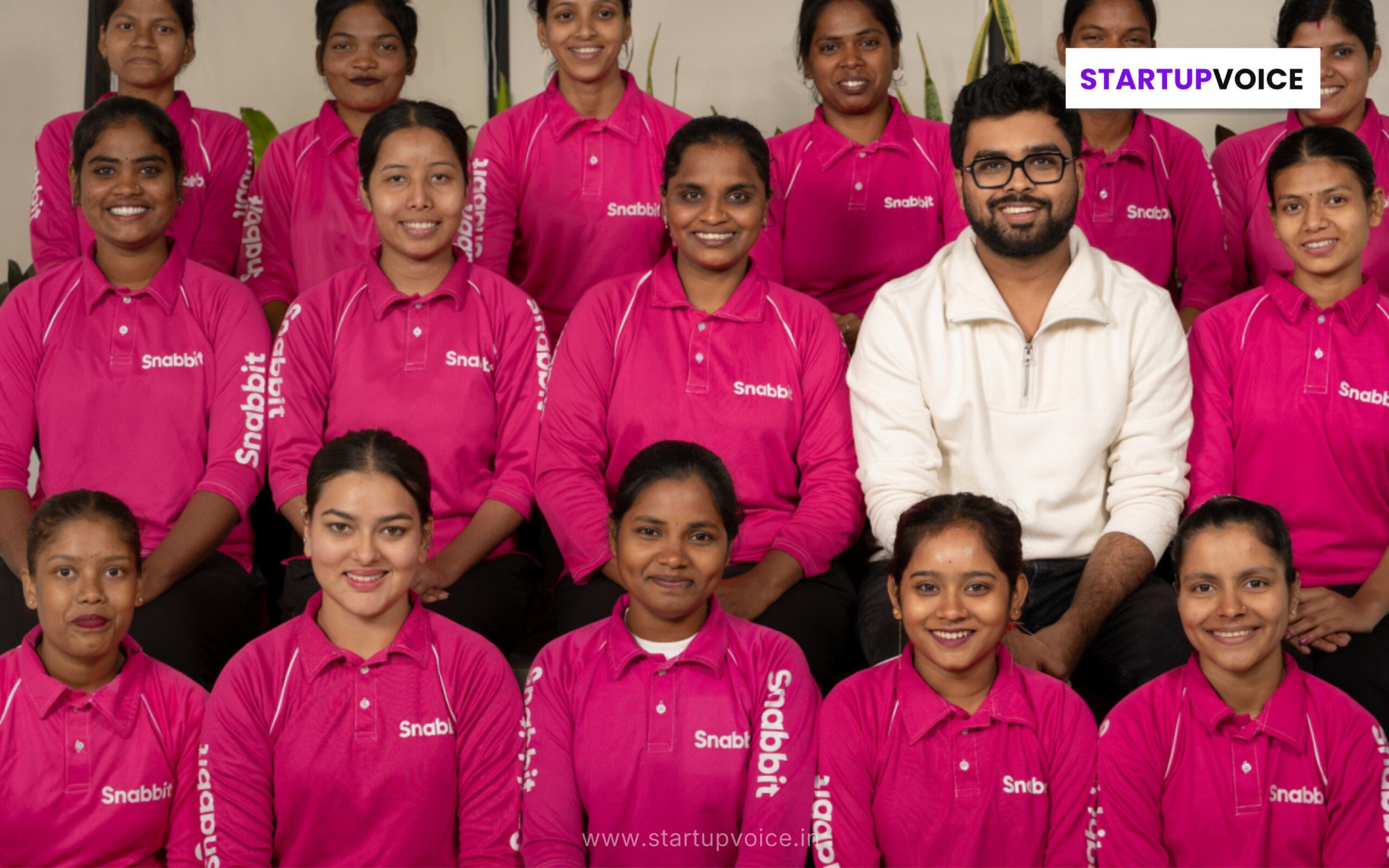
Understanding the scale of the problem, Aayush knew Snabbit couldn’t be built alone. He brought together a small but focused core team—professionals with experience in operations, technology, and on-ground execution.
Instead of chasing rapid expansion early on, the team prioritised building strong operational foundations—vendor onboarding processes, service quality benchmarks, and customer trust mechanisms.
The philosophy was simple: scale only after stability.
The Meaning Behind the Name: Why “Snabbit”?
The name Snabbit is derived from the idea of speed and immediacy—something that gets done “in a snap.”
For Aayush, the name reflected the brand promise clearly.
“Snabbit stands for instant action without chaos. Fast doesn’t have to mean careless.”
The philosophy behind the name shaped everything from app UX to service delivery timelines.
Product Deep Dive: How Snabbit Actually Works
At its core, Snabbit is a hyperlocal services platform designed for urban India. But unlike traditional marketplaces, it focuses on speed + standardisation.
Key Differentiators:
- Quick-response service model rather than long booking windows
- Verified service professionals with structured onboarding
- Defined service categories instead of vague listings
- Predictable pricing to eliminate negotiation friction
The platform matches users with nearby service professionals who are already vetted, trained, and ready to deploy—cutting down wait times drastically.
Snabbit’s backend technology focuses heavily on:
- Location intelligence
- Workforce availability mapping
- Real-time demand forecasting
This ensures that speed doesn’t compromise service quality.
Business Model: Built for Sustainability, Not Hype
Snabbit follows a B2C hyperlocal services model, monetised through a commission-based structure on completed services.
Instead of undercutting prices unsustainably, Snabbit focuses on:
- Fair earnings for service professionals
- Transparent pricing for customers
- Operational margins that support long-term growth
“We don’t believe in burning money to buy habits,” Aayush says. “We believe in building habits through trust.”
Bootstrapping the Journey
Snabbit began as a bootstrapped venture, funded initially by personal savings and early operational revenue.
Bootstrapping forced discipline.
Every decision—tech investment, city rollout, team hire—was made with a sharp focus on ROI and unit economics.
“Bootstrapping teaches you what actually matters,” Aayush reflects. “It forces clarity.”
Early Validation and Market Signals
Instead of chasing vanity metrics, Snabbit focused on:
- Repeat usage
- Customer retention
- Service completion rates
Positive word-of-mouth and organic adoption in initial micro-markets validated the core hypothesis: users were willing to pay for speed and reliability.
Market Strategy: Why Hyperlocal Focus Matters
Credit: Snabbit
India is not one market—it’s hundreds of micro-markets.
Snabbit’s strategy is to:
- Dominate small operational clusters
- Build density before expansion
- Customise service categories by locality
This hyperlocal-first approach allows tighter control over quality and faster operational learning.
Challenges Along the Way
Building in the unorganised services sector comes with unique challenges:
- Workforce retention
- Service consistency
- Customer trust in early stages
Snabbit addressed these by investing heavily in:
- Service partner engagement
- Clear incentive structures
- Transparent customer communication
“Trust is built in small moments,” Aayush notes. “One successful service at a time.”
Vision: Structuring India’s Informal Service Economy
Aayush sees Snabbit as more than a convenience platform.
He envisions it as a bridge between India’s informal workforce and a structured digital economy—bringing dignity, predictability, and growth to service professionals.
“If we can organise this sector, the impact is massive—not just economically, but socially.”
The Road Ahead: What’s Next for Snabbit
Looking forward, Snabbit plans to:
- Expand to more urban clusters
- Add new high-frequency service categories
- Strengthen training and upskilling programs
- Invest deeper in technology-led operations
The focus remains clear: grow responsibly without compromising service quality.
Conclusion: Speed With Purpose
Snabbit’s story is not about disruption for disruption’s sake. It’s about solving a real, everyday problem—quietly but effectively.
For Aayush Agarwal, the journey is just beginning.
“If we can give people back their time and peace of mind, we’ve done our job.”
In a startup ecosystem often obsessed with scale and headlines, Snabbit stands out by focusing on something far more powerful—reliability at speed.
FAQs
1. What problem does Snabbit solve?
Snabbit addresses delays, unreliability, and trust issues in India’s unorganised household services sector.
2. Is Snabbit a marketplace or service provider?
Snabbit operates as a managed hyperlocal services platform with verified professionals.
3. Is Snabbit bootstrapped or funded?
Snabbit started as a bootstrapped venture.
4. Who is Snabbit ideal for?
Urban individuals and families who value speed, reliability, and transparency.
5. What makes Snabbit different from other service apps?
Its focus on instant availability, structured operations, and service quality.