
Quick Overview
Indian deep‑tech wearables startup Temple has raised ₹491 crore (approx. $54 million) in a seed funding round at a post‑money valuation of ₹1,730 crore (approx. $190 million), according to media reports. The round, announced on 27 February 2026, was structured largely as a friends‑and‑family and founder‑backed investment, with participation from more than 30 employees alongside prominent external investors. The company is still in stealth mode and yet to launch a commercial product.
Funding Details
Temple’s seed financing — one of the largest early‑stage raises this year in India’s deep‑tech hardware segment — was led by its founder Deepinder Goyal, who committed a significant portion of the capital. Institutional participation included notable investors such as Steadview Capital, Peak XV Partners, Dharana Capital, Info Edge Ventures, and Vy Capital, along with angel commitments from industry figures including Vijay Shekhar Sharma, Kunal Shah, Nithin Kamath, and Nikhil Kamath. More than 30 Temple employees also invested personal capital at the same valuation as external backers, reflecting strong internal confidence. The round marks Temple’s first external fundraising, with no public record of prior institutional investments. The founder-centric structure differentiates it from conventional seed rounds.
About Temple
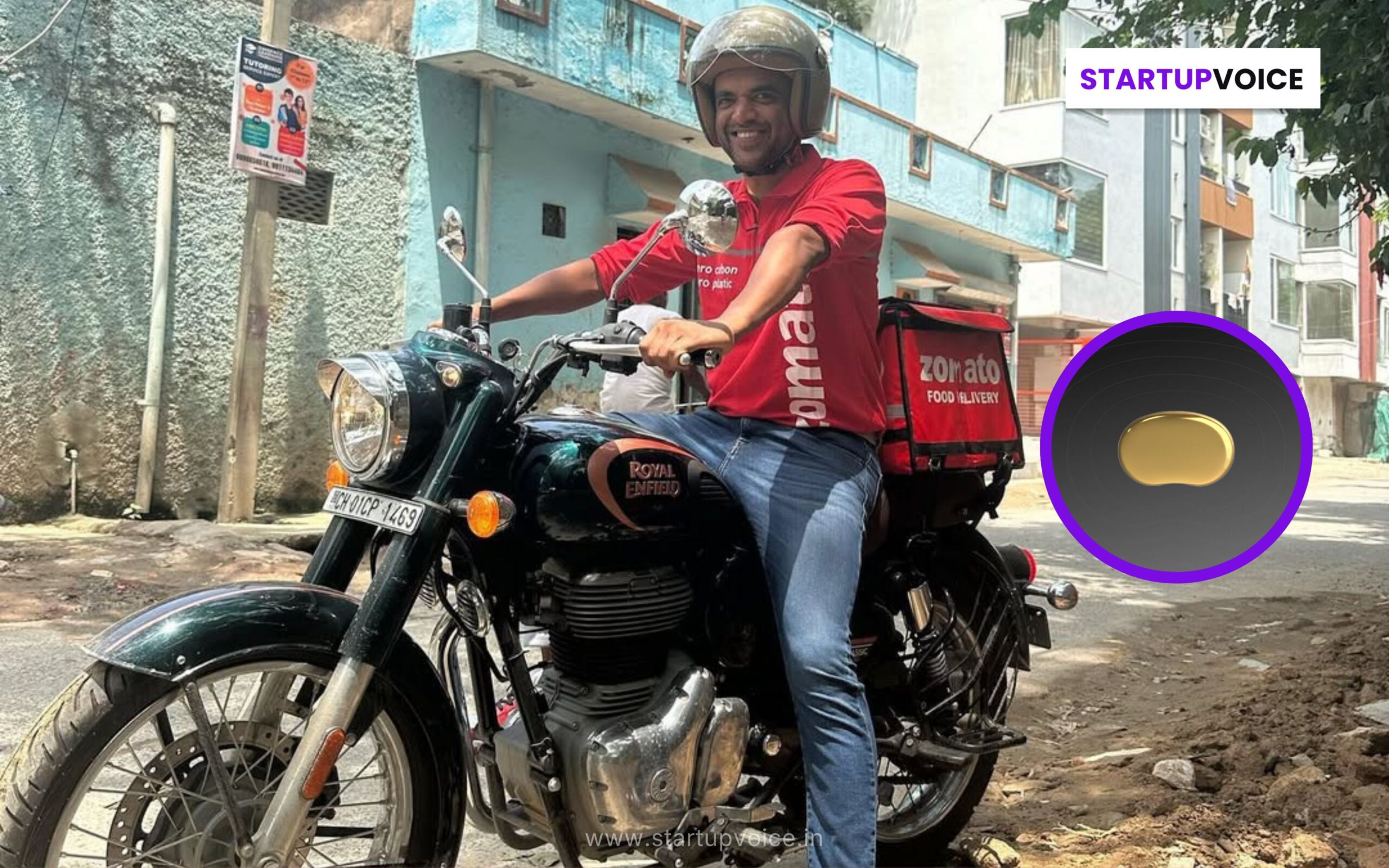
Temple is a deep‑tech wearable technology startup founded by Deepinder Goyal, co‑founder of Zomato. The company is developing an advanced health and performance wearable designed to monitor cerebral blood flow and high-precision physiological signals that conventional consumer devices cannot measure. Based in India and currently in stealth mode, Temple has not launched a commercial product yet. The startup is actively recruiting engineers and researchers in embedded systems, computational neuroscience, and sensor algorithms. Its target market appears to be high-performance athletes and users seeking precision biometric insights. Temple’s focus on cutting-edge hardware and software integration positions it in a niche segment of the health-tech and wearable industry.
Use of Funds
The capital from this round will be directed toward core hardware development, deep-tech research, and product engineering. Temple plans to expand its R&D teams, hire domain specialists, and build its embedded systems and manufacturing capabilities. Recruitment emphasizes candidates with strong technical expertise and alignment with high-performance objectives. No commercial go-to-market expenditure has been disclosed, consistent with the company’s pre-launch status.
Conclusion
Temple’s funding highlights growing investor interest in deep‑tech hardware startups in India, a segment that has traditionally received less attention than software or consumer internet ventures. The wearable technology market is globally competitive, dominated by brands such as Whoop, Oura, and Garmin; Temple represents one of the few Indian startups attempting high-precision physiological monitoring at scale.
The substantial valuation at seed stage signals confidence in the founder’s track record and the strategic potential of neurotech and biosensing devices. India’s policy push for hardware and semiconductor development provides a supportive backdrop for such startups. The round also indicates an evolving investor appetite for tech that extends beyond software platforms, potentially paving the way for future investment in deep-tech health devices and performance wearables