

India’s startup ecosystem is known for founders who identify everyday problems and try to solve them using technology. While many startups are built by professionals with years of industry experience, some stories emerge from much earlier in life.
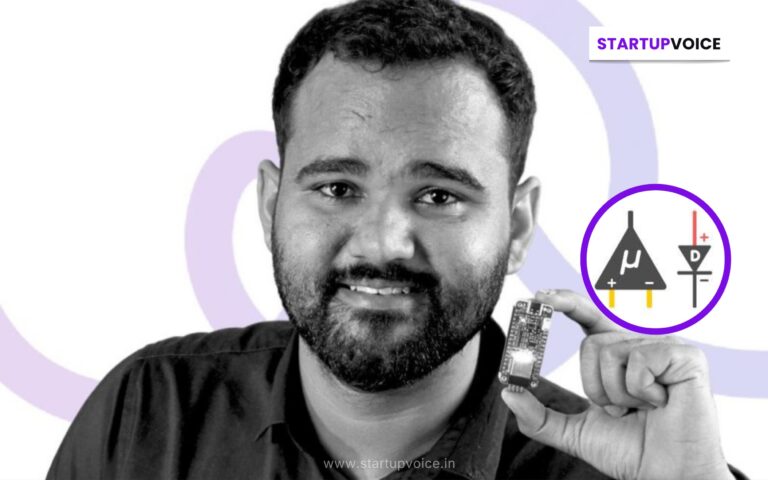
One such story is that of Neurapex AI, a young health-tech initiative founded by Jaiwardhan Tyagi.
Still in his teenage years, Jaiwardhan began exploring artificial intelligence, coding, and machine learning with a focus on real-world applications. Over time, his curiosity turned toward healthcare, where AI is increasingly being explored for analyzing medical data and images.
Neurapex AI is built around this idea — using artificial intelligence tools to assist in analyzing medical information and supporting early insights in healthcare settings. While the project is still at an early stage, it reflects the growing interest among young Indian builders to experiment with advanced technologies.
The Beginning of Neurapex AI

Neurapex AI started not from a traditional startup plan, but from curiosity about artificial intelligence and its real-world applications.
Jaiwardhan Tyagi began learning programming and AI concepts during his school years. Like many young developers today, he explored online courses, coding platforms, and open-source tools to understand how machine learning systems work.
As his interest deepened, he started exploring fields where artificial intelligence could potentially make an impact. Healthcare quickly emerged as one of the most interesting areas.
Medical systems generate huge amounts of data, especially in the form of medical images such as MRI scans and dermatology photographs. Interpreting these images requires trained specialists, which are not always easily available.
This gap led to the early idea behind Neurapex AI — building experimental tools that could analyze visual medical data and highlight patterns that doctors might review.
What began as experimentation slowly turned into a structured project, eventually taking shape as Neurapex AI.
Founder Background and Early Inspiration
Jaiwardhan Tyagi represents a growing generation of young technology enthusiasts who begin building products at an early age.
Growing up in Uttar Pradesh, he developed an interest in mathematics, computers, and programming during his school years. Access to online learning resources made it possible for him to study coding and artificial intelligence independently.
Rather than focusing only on small coding exercises, he began experimenting with projects that attempted to solve practical problems.
Artificial intelligence particularly caught his attention because of its ability to analyze patterns in data — from images to text and numbers.
As he explored more about AI applications around the world, healthcare stood out as a field where technology was rapidly evolving. This interest eventually became the foundation for the Neurapex AI project.
The Core Idea Behind Neurapex AI
Neurapex AI focuses on exploring how artificial intelligence can assist in analyzing medical images and health data.
Modern healthcare generates enormous amounts of diagnostic information. From MRI scans to skin images, doctors often rely on visual interpretation to detect patterns that may indicate diseases or medical conditions.
AI systems trained on datasets can sometimes help identify these patterns more quickly by scanning large volumes of data.
The concept behind Neurapex AI is to build tools that can process medical images and highlight possible areas of interest for further examination by professionals.
For example, some of the prototypes associated with the project include:
Brain scan analysis tools
AI models that attempt to analyze MRI scans and identify patterns related to neurological conditions.
Dermatology image analysis
AI systems designed to examine skin images and detect visible dermatological patterns.
These systems are designed as support tools rather than diagnostic replacements, meaning the final medical judgment remains with healthcare professionals.
Business Model and Market Opportunity
Healthcare technology startups typically operate through software-based models, and Neurapex AI is expected to follow a similar approach as it evolves.
Possible revenue models in this sector include:
Software licensing for hospitals and clinics
Medical institutions may subscribe to AI tools that assist with data analysis.
Healthcare platform integrations
AI tools can be integrated into existing diagnostic platforms used by hospitals or laboratories.
Enterprise AI services
Customized solutions can be developed for healthcare organizations looking to adopt artificial intelligence.
However, it is important to note that health-tech startups require extensive testing, validation, and regulatory compliance before their tools can be widely used.
Because of this, many companies in this space spend years refining their technology before large-scale commercialization.
Early Visibility and Public Attention
Neurapex AI began attracting attention largely because of the age of its founder and the ambitious nature of the project.
Young founders experimenting with advanced technologies such as artificial intelligence often capture public curiosity, especially when the technology is applied to sectors like healthcare.
Jaiwardhan Tyagi’s work gained visibility through startup discussions, media mentions, and entrepreneurial platforms where he presented the concept behind Neurapex AI.
For early-stage startups, visibility plays an important role in opening opportunities for mentorship, partnerships, and feedback from experienced professionals.
These early interactions can often shape the direction of the startup’s future development.
Challenges of Building a Healthcare AI Startup
Healthcare is one of the most complex sectors for technology startups.
Even well-funded companies with experienced teams face challenges in developing medical technologies.
One major challenge is clinical validation. AI models must be tested extensively to ensure they produce reliable results.
Another important factor is regulation. Medical technologies must meet strict healthcare standards before they can be deployed in hospitals or diagnostic centers.
Access to large, high-quality medical datasets is also necessary for training AI systems effectively.
For young founders like Jaiwardhan Tyagi, navigating these challenges requires collaboration with experts, researchers, and healthcare professionals.
The process often involves continuous learning, experimentation, and iteration.
Future Direction for Neurapex AI
As the project develops, Neurapex AI’s next steps are likely to revolve around improving its technology and building stronger collaborations.
This may include:
• Improving the accuracy of AI models
• Working with healthcare professionals for testing and validation
• Developing more refined software tools
• Exploring partnerships with medical institutions or research organizations
In healthcare technology, long-term success often depends on strong scientific validation and practical usability in clinical environments.
If Neurapex AI continues evolving, these aspects will play an important role in its growth.
Relevance of AI Startups in Healthcare Today
Artificial intelligence has become one of the most discussed technologies in modern healthcare.
Across the world, AI is being explored for multiple purposes — medical imaging, predictive diagnostics, hospital workflow automation, and drug discovery.
India’s healthcare system faces challenges such as limited specialist availability in many regions. Technology-driven solutions are often seen as one way to support healthcare infrastructure.
Startups experimenting in this area contribute to the broader innovation ecosystem by exploring new ideas and technological possibilities.
Even early-stage projects can play a role in pushing conversations forward around the future of healthcare technology.
Lessons from the Neurapex AI Journey
The story of Neurapex AI reflects how the startup landscape is changing.
Today, access to learning platforms, open-source software, and global developer communities allows young individuals to explore advanced technologies earlier than ever before.
For Jaiwardhan Tyagi, Neurapex AI began as an experiment driven by curiosity about artificial intelligence and healthcare.
While the project is still developing, the journey highlights an important shift — innovation is no longer limited to experienced professionals or large research labs.
Young builders are entering the technology space earlier, testing ideas, and learning by creating real-world projects.
And sometimes, those experiments evolve into startups.
FAQs
What is Neurapex AI?
Neurapex AI is a healthtech startup that uses artificial intelligence to assist in diagnosing neurological and skin-related disorders through advanced brain scan and skin analysis tools.
Who founded Neurapex AI?
The startup was founded by Jaiwardhan Tyagi, a 14-year-old entrepreneur from India, making him one of the youngest founders in the medtech AI space.
How does Neurapex AI work?
Neurapex AI leverages AI-powered algorithms to analyze brain scans and skin images, helping doctors and healthcare professionals detect abnormalities more efficiently and accurately.
How much funding has Neurapex AI raised?
The startup secured ₹60 lakh in funding on the Shark Tank India platform, where boAt co-founder Aman Gupta invested for 5% equity.
Who can benefit from Neurapex AI?
Healthcare providers, diagnostic centers, and patients can benefit from faster and more precise detection of neurological and dermatological conditions, improving early intervention and care.