
India’s hotel industry was once a confusing space for budget travellers. Affordable rooms often meant unpredictable quality, unclear pricing, and zero assurance of hygiene or safety. For years, travellers simply adjusted — because there weren’t many alternatives.
Then came OYO.
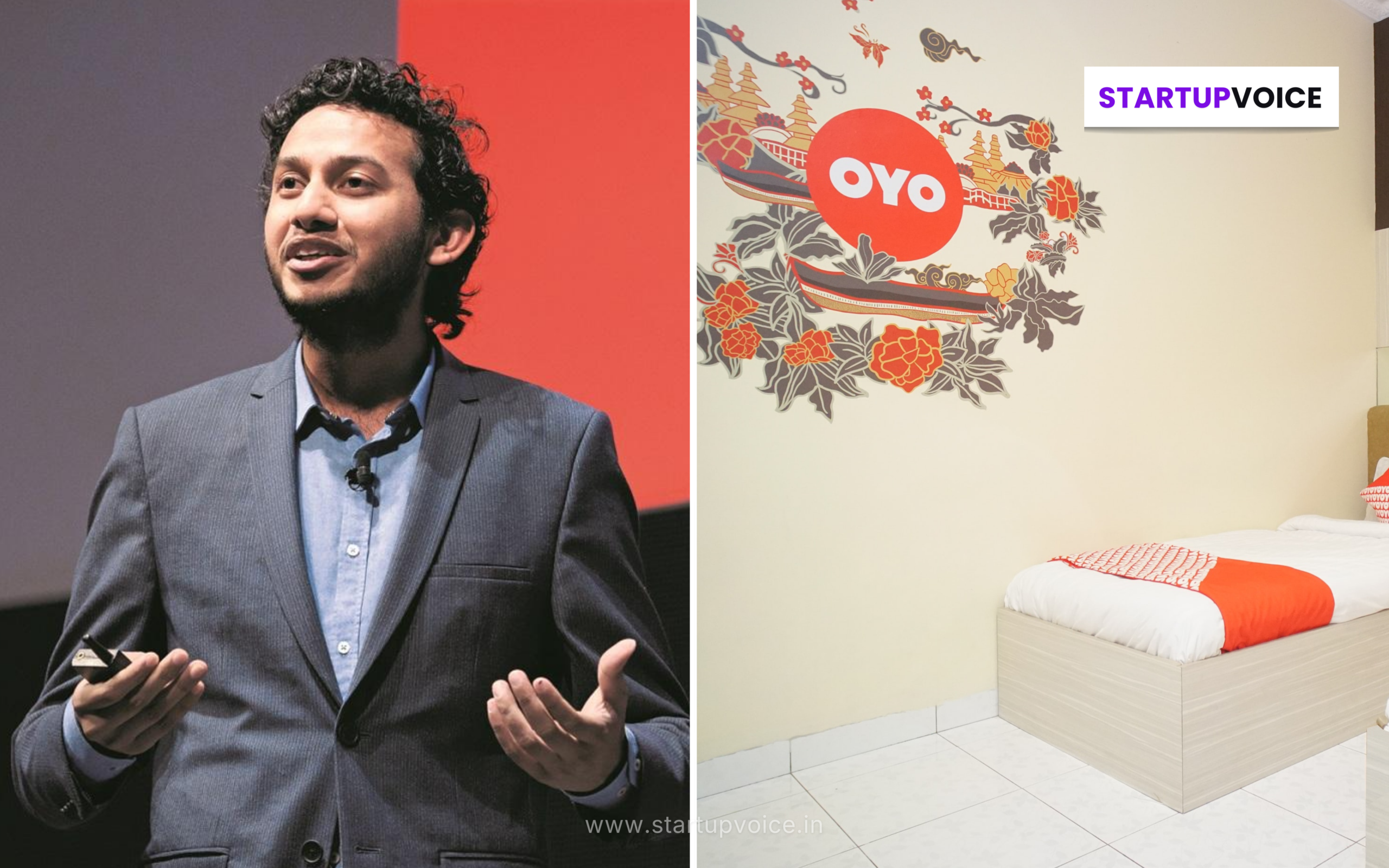
Founded by Ritesh Agarwal, OYO began with a simple observation: India did not lack hotel rooms — it lacked standardised, reliable, affordable hotel experiences. What started as a teenager’s curiosity about budget travel slowly turned into one of India’s most talked-about startup journeys.
Today, OYO is not just a hospitality brand; it represents a shift in how Indians book and experience affordable stays.
The Startup Story: A Teenager Who Questioned the Way India Traveled
The idea behind OYO did not emerge inside a corporate boardroom. It started with a young boy from Odisha who was fascinated by entrepreneurship and travel.
Ritesh Agarwal grew up in a small town in Odisha. As a teenager, he travelled across India, often staying in budget hotels. During these trips, he noticed something frustrating. Two hotels charging the same price could offer completely different experiences. One room might be clean and comfortable; another could be poorly maintained, with no transparency in pricing.
There was no standard.
At just 17, Ritesh launched a project called Oravel Stays, inspired by the concept of aggregating budget accommodations. However, the model initially focused more on listing properties rather than controlling quality. Over time, he realised that mere aggregation wouldn’t solve the core issue.
The turning point came when he understood that the real gap wasn’t discovery — it was standardisation.
In 2013, OYO (short for “On Your Own”) was born. The idea was bold yet simple: partner with small and mid-sized hotels, standardise rooms with basic quality benchmarks, and offer customers a predictable experience at affordable prices.
At the time, the concept felt ambitious. The Indian hospitality sector was largely unorganised, and convincing hotel owners to change their operations was not easy. But Ritesh believed that if he could create trust at scale, the opportunity would be massive.
Founder Background: The Making of Ritesh Agarwal
Ritesh Agarwal did not follow a conventional path.
Born in Bissam Cuttack, Odisha, he showed entrepreneurial curiosity early in life. He was deeply inspired by business stories and startup founders. Instead of preparing for a traditional career, he immersed himself in understanding how companies are built.
At 18, he became one of the youngest recipients of the Thiel Fellowship, which supports young entrepreneurs globally. The fellowship encouraged him to drop out of college and build his venture full-time.
Moving to Delhi and later Gurgaon, Ritesh entered the competitive world of startups with limited experience but strong conviction. He wasn’t backed by a hospitality background. He wasn’t a hotelier. What he had was sharp observation, a willingness to learn fast, and the ability to adapt quickly when things didn’t work.
That adaptability would later define OYO’s journey.
The Startup & Its Solution: Standardising Chaos in Budget Hospitality

At its core, OYO’s solution was operational.
Instead of building hotels from scratch, OYO partnered with existing budget properties. The company would:
• Audit and upgrade rooms to meet basic quality standards
• Standardise essentials like clean linen, Wi-Fi, air conditioning, and toiletries
• Rebrand the property under the OYO umbrella
• List it on the OYO app and website
• Manage pricing dynamically
This approach allowed OYO to scale rapidly without owning real estate.
For travellers, this meant predictability. When someone booked an OYO room in Delhi, Jaipur, or Bengaluru, they expected a certain baseline experience.
For hotel owners, OYO offered:
• Higher occupancy
• Technology support
• Branding
• Access to a wider customer base
The company essentially acted as a bridge between fragmented supply (small hotels) and growing demand (urban travellers, millennials, business visitors, and families).
What differentiated OYO from simple hotel listing platforms was its focus on operational control and brand standardisation rather than just marketplace listings.
Business Model: How OYO Makes Money
OYO’s business model evolved over time, but at a fundamental level, it operated on revenue-sharing and franchise partnerships.
Target Customers
• Budget-conscious travellers
• Young professionals
• Business travellers
• Families seeking affordable short stays
• Students and solo travellers
Revenue Model
OYO partnered with hotel owners under revenue-sharing agreements. The company would take a percentage of the revenue generated through bookings made via its platform.
In some models, OYO also worked on a minimum guarantee basis, where it assured hotel owners a fixed income and managed pricing and occupancy directly.
The company leveraged:
• Technology-driven dynamic pricing
• Centralised booking systems
• Data analytics for demand forecasting
This asset-light approach allowed OYO to expand quickly across cities without heavy capital investment in real estate.
Growth Journey: Rapid Expansion, Global Ambitions
OYO’s early growth was fast — almost unusually fast for the Indian startup ecosystem at the time.
Within a few years, the company expanded across multiple Indian cities. The mobile-first booking experience appealed to India’s growing base of smartphone users.
Soon, OYO began expanding internationally — entering markets like Southeast Asia, Europe, and even the United States.
The startup attracted major investors and raised significant funding over multiple rounds. Its rapid scale made headlines globally and positioned it among India’s most high-profile startups.
In 2023, OYO also entered public market discussions, reflecting its ambition to mature beyond startup status.
However, rapid growth also brought complexity.
Challenges & Learnings: Scaling Isn’t Always Smooth
OYO’s journey hasn’t been linear.
Rapid expansion led to operational challenges. Managing thousands of partner hotels across countries created quality inconsistencies. Some hotel owners raised concerns about revenue models and contracts. International expansion proved more complex than anticipated in certain markets.
The COVID-19 pandemic dealt a severe blow to the hospitality industry worldwide. Travel restrictions and lockdowns dramatically impacted bookings.
OYO had to restructure operations, optimise costs, and refocus its strategy.
These challenges highlighted a critical lesson in startup scaling: growth without operational depth can create pressure.
Over time, OYO shifted towards sustainable growth, improved partner relationships, and refined its global strategy.
For Ritesh Agarwal, the journey reinforced the importance of adaptability, long-term thinking, and operational discipline.
Vision & Future Plans: Building a Sustainable Hospitality Brand
Today, OYO is focused on strengthening its core markets.
Short-term priorities include:
• Improving profitability
• Strengthening partner relationships
• Enhancing customer experience
• Leveraging technology for smarter operations
Long-term, OYO aims to become a trusted global hospitality brand rooted in affordability and reliability.
Rather than chasing expansion at any cost, the focus has shifted toward stability and sustainable scaling.
India continues to remain central to its strategy, given the country’s rising domestic travel demand and growing middle class.
Why OYO Matters Today
India’s travel ecosystem has transformed over the past decade. Affordable air travel, digital payments, and online booking platforms have reshaped consumer behaviour.
OYO played a significant role in formalising and organising India’s fragmented budget hotel segment.
By bringing small hotels into a branded network, it introduced:
• Greater pricing transparency
• Standardisation
• Wider digital visibility for small property owners
Even beyond hospitality, OYO’s journey represents a broader shift in Indian entrepreneurship — where founders from smaller towns can build companies with global presence.
For many aspiring entrepreneurs, Ritesh Agarwal’s story demonstrates that age and background are not limitations if the problem is real and the execution is persistent.
Conclusion: From Small-Town Roots to Global Hospitality Ambition
OYO’s story is not just about hotel rooms. It is about identifying inefficiencies in everyday experiences and building systems that make them simpler.
From a teenager travelling across India to leading one of the country’s most recognised startup brands, Ritesh Agarwal’s journey reflects both ambition and resilience.
The company has faced highs and lows, rapid growth and recalibration, expansion and restructuring. Yet, it continues to evolve.
As India’s travel sector grows and becomes more digital-first, OYO remains a significant player shaping how budget hospitality is experienced.
The road ahead may bring new challenges, but if its journey so far is any indication, OYO is likely to keep adapting — one stay at a time.
FAQs
Who is the founder of OYO?
OYO was founded by Ritesh Agarwal, an Indian entrepreneur from Odisha who started the company at a very young age after observing the lack of standardisation in India’s budget hotel segment.
What does OYO do?
OYO partners with small and mid-sized hotels to standardise rooms, improve basic amenities, and list them on its platform, making budget stays more reliable and accessible for travellers.
When was OYO founded?
OYO was founded in 2013, after Ritesh Agarwal pivoted from his earlier project, Oravel Stays, to focus on quality standardisation in hospitality.
How does OYO make money?
OYO primarily works on a revenue-sharing model with hotel partners. It earns a percentage of bookings made through its platform and, in some cases, operates under franchise or fixed-income arrangements.
Is OYO only available in India?
While OYO started in India, it has expanded to several international markets over the years, aiming to build a global presence in affordable hospitality.